Animal Sacrifices in the Third and Fourth Temples
/Will animal sacrifices again be offered by the Jews in a literal, physical, future temple? The answer is yes, at two different times, for two different reasons. The Bible teaches that the Jews who reject Jesus as their Messiah will return to offering animal sacrifices in the third temple, which is not yet built. The Bible also teaches that burnt offerings, sin offerings, and peace offerings will also be offered by the Jews during the millennial reign of Christ. Sacrifices in the fourth temple are even described as “making atonement” (Ezek. 43:20, 26; 45:15-20)? How can this be since Jesus is our “once for all sacrifice” (e.g., Rom. 6:1; 1 Pet. 3:18; Heb. 9:26, 28; 10:10)?
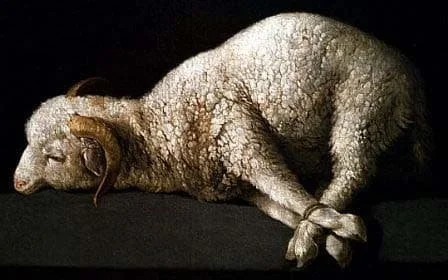
Animal sacrifices “after the death of Christ” have caused many to stumble, balk, and say to themselves, “Wait a minute, this can’t be right!” Granted, animal sacrifices may seem wrong, unnecessary, and contradictory to what the New Testament teaches. Yet the Bible tells us of two different times when animal sacrifices will be offered in a temple in Jerusalem.
Before we seek to unravel the riddle of future animal sacrifices, let us remind ourselves that God’s Word is truth. We study biblical texts, in their context, to discover objective truth outside of us in the pages of Scripture. The psalmist wrote, “The sum of your Word is truth” (Ps. 119:160). Jesus prayed, “Your Word is truth” (Jn. 17:17). When the Bible speaks, God speaks truth. We first establish what God says in His Word, then we seek to discover the authorial intent, what the original author meant for his original audience to understand by what He wrote. Once we understand the authorial intent and meaning of a biblical text, we can then consider how that text applies to our lives.
Animal Sacrifices in the Temple of Daniel’s 70th Week (third temple)
The first example of animal sacrifices after Jesus’ death and the destruction of the second temple is in the third temple. The third temple will be built before or during the first half of Daniel’s 70th week (Dan. 9:27; Mt. 24:15; 2 Thess. 2:3-4; Rev. 11:1). We are told that in the middle of Daniel’s 70th week, the Antichrist commits “the abomination of desolation” (Dan. 9:27; Mt. 24:15; 2 Thess. 2:3-4; Rev. 11:1-2). In order for the Antichrist to abominate the temple in the future tribulation, a third physical temple must be built. Animal sacrifices will be offered in the third temple.
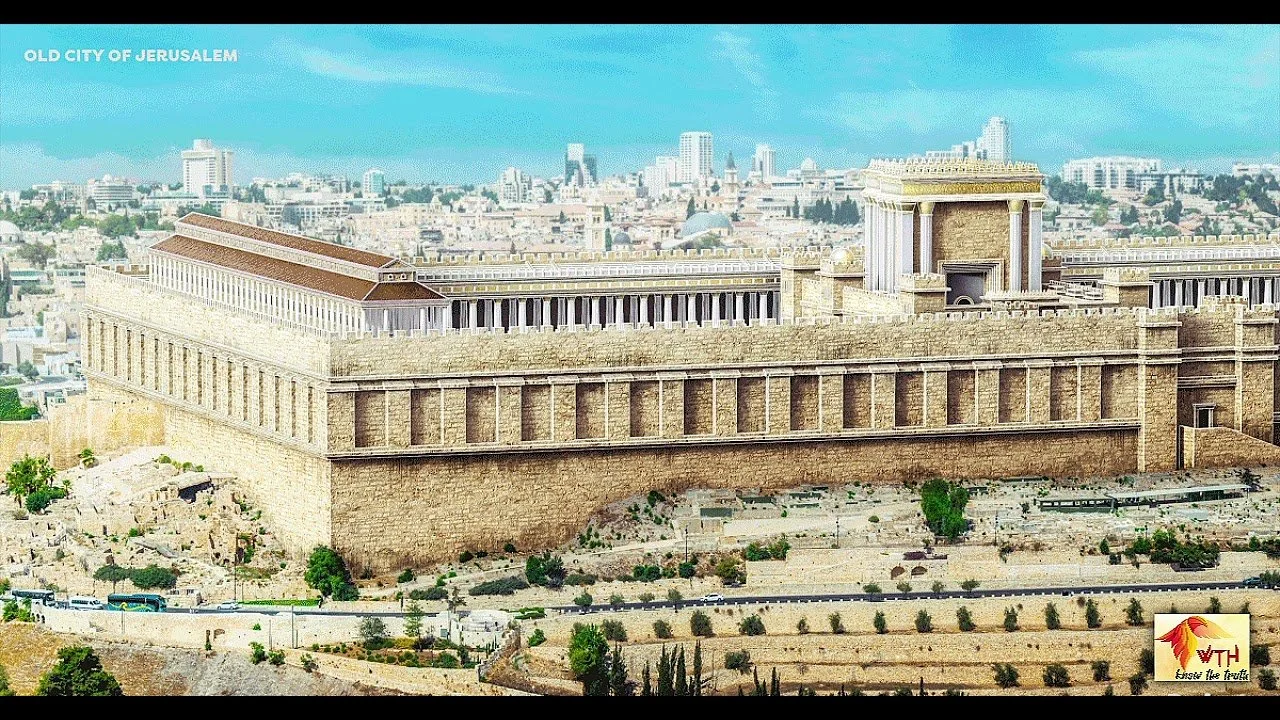
concept of third temple complex
Some object to a literal, physical third temple by pointing out that, “Jesus is the temple.” By saying this they ignore, erase, or deny many texts that speak of literal, physical, Jewish temples. Yes, Jesus did speak of His body, metaphorically, as a temple (Mt. 27:40; Mk. 14:58; 15:29; Jn. 2:19-21). John tells us in His gospel (Jn. 2:19–21), what Jesus meant:
Jesus answered them, “Destroy this temple, and in three days I will raise it up.” The Jews then said, “It took forty-six years to build this temple, and will You raise it up in three days?” But He was speaking of the temple of His body.
The Jews, hearing Jesus’ words, thought He was referring to the destruction of the second temple, but John tells us Jesus was using “temple” as a metaphor to speak of His body being crucified, i.e., “destroy this temple.” We might also point out that after Jesus’ second coming in glory to earth (Zech. 14:1-5; Mt. 24:29-31; 2 Thess. 1:7-10; Rev. 19:11-16), after His millennial reign (Rev. 20:1-7), after the great white throne judgment (Rev. 20:11-15), after the creation of the new heavens and earth (Isa. 65:17; 66:22; 2 Pet. 3:13; Rev. 21:1), we are told that in the New Jerusalem, “the Lord God Almighty and the Lamb are its temple” (Rev. 21:22).
Yet Jesus referring to Himself metaphorically as a temple and John writing about the Lamb of God being the New Jerusalem’s temple, does not erase all references to literal temples in the Bible, i.e., Solomon's temple (1 Kings 6-8), the first temple; Ezra/Herod's temple (Ezra 3:8-9; 5:3; 6:13-15; Mt. 24:1; Jn. 2:20), the second temple; the third future temple of the tribulation which the antichrist abominates (Dan. 9:27; 2 Thess. 2:3-4; Rev. 11:1-2); and the fourth millennial temple (Ezek. 40-48).
It is helpful to remember that the abomination of desolation by the Antichrist, in the third temple, occurs in the middle of Daniel’s 70th week (Dan. 9:27; Mt. 25:15; 2 Thess. 2:3-4). There are many references to the mid-point of the tribulation making the abomination of desolation in the third temple a key prophetic time marker for end time events:
• “Forty-two months” (Rev. 11:2; 13:5).
• “Twelve Hundred and Sixty Days” (Rev. 11:3).
• “One thousand two hundred and sixty days” (Rev. 12:6).
• “Times, time, and a half a time” (Dan. 7:25; 12:7; Rev. 12:14).
• “In the middle of the week” (Dan. 9:27).
Thus, the third temple must be rebuilt, and the Jews must be offering sacrifices by the midpoint or three and one half years into Daniel’s 70th week. We know this because:
1. The abomination of desolation is still future according to Daniel (Dan. 9:27), Jesus (Mt. 24:15; Paul (2 Thess. 2:3-4), and John (Rev. 11:1).
2. The abomination of desolation will occur at the midpoint, three and a half years, 42 months, or 1260 days into Daniel’s 70th week (Dan. 9:27; 12:11).
3. The future seed of the serpent (Gen. 3:15), the prince to come (Dan. 9:26-27), the man of lawlessness (2 Thess. 2:3), the Antichrist (1 Jn. 2:18), or beast (Rev. 11:7; 13:1-18) will commit the abomination of desolation in the third temple.
4. We are told the Antichrist will “put a stop to animal sacrifices and grain offerings” in the third temple when he abominates it (Dan. 9:27).
5. The Antichrist will take his seat in the temple of God, i.e., the third temple, and display himself to be God (2 Thess. 3:4).
6. Jesus says the Antichrist will be seen “in the holy place” of the third temple when he abominates it (Mt. 24:15).
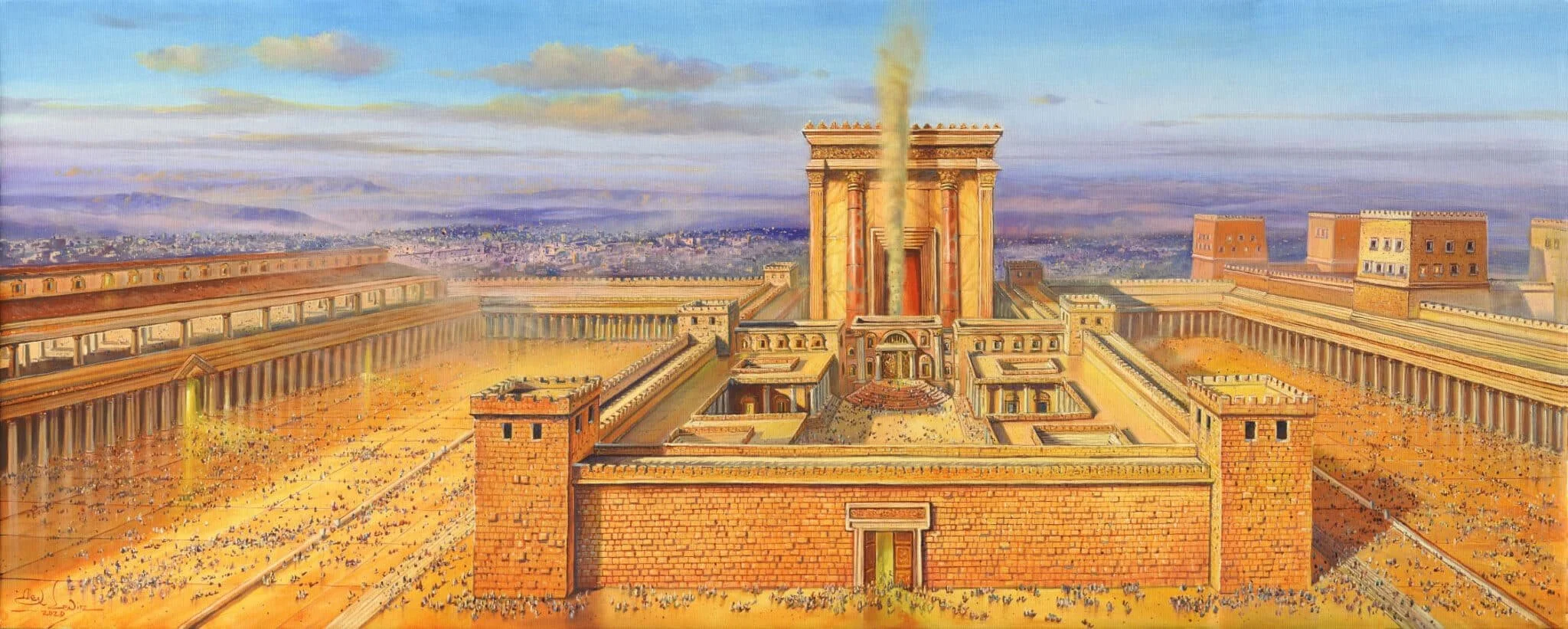
All these texts necessitate a third temple being built. Some have asked how a third temple can be built with the Dome of the Rock, Al Aqsa (Qubbat al-Sakhrah in Arabic) standing in the center of the temple mount. There are two possibilities, either the Dome of the Rock will be destroyed and removed, or the third Jewish temple will be built to the north of the Dome of the Rock in alignment with the east gate. Once the third temple is rebuilt the Jews will again offer animal sacrifices as prescribed in the Law of Moses. Jewish worshipers will offer animal sacrifices in the third temple because they have rejected Jesus Christ, the Messiah (Ps. 118:22-24; Isa. 53). Thus, they will return to the Old Covenant sacrificial system. While offering animal sacrifices in the third temple, they will be looking for their Messiah’s first coming, not realizing their Messiah already came to die on the cross for their sins (Isa. 53; Jn. 11:49-52; 18:14). Thus, the first instance of future animal sacrifices will be in the third temple by religious Jews who have rejected the Lord Jesus Christ as their Messiah. They will offer animal sacrifices in obedience to the Law of Moses. In the middle of the tribulation, Daniel’s 70th week, the Antichrist will put an end to animal sacrifices when he abominates the third temple (Dan. 9:27; Mt. 25:15; 2 Thess. 2:3-4).
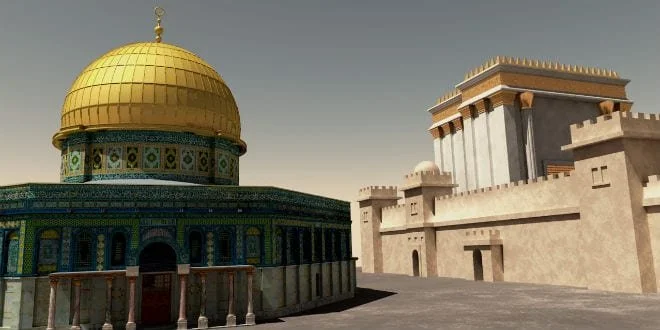
Concept image of third Jewish temple built to the north of the dome of the rock
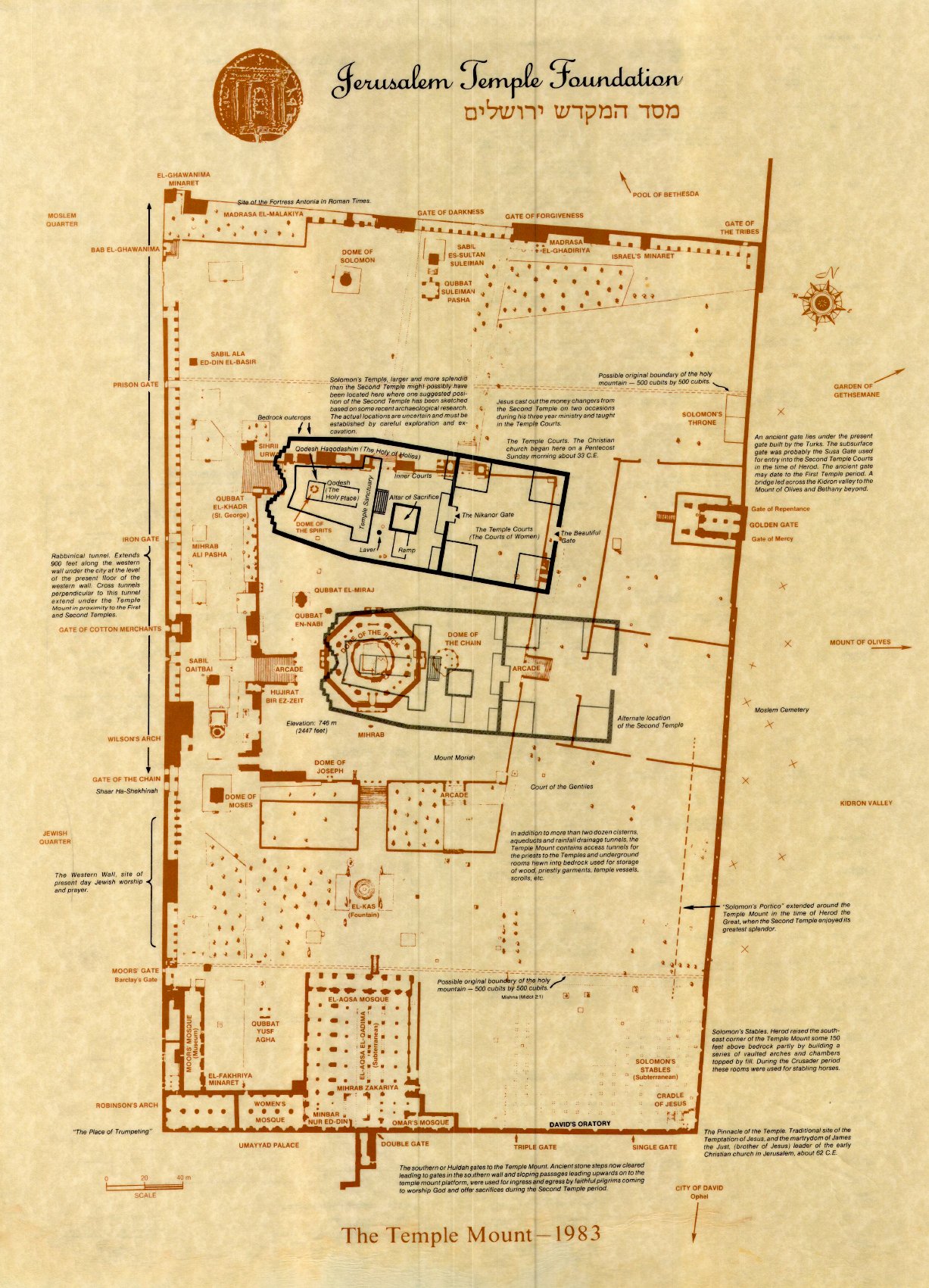
Concept layout showing the third Jewish temple both replacing the Dome of the Rock and located north of the dome of the rock and aligned with the east gate
Animal Sacrifices in the Future Millennial Temple (fourth temple)
The second instance of animal sacrifices is even more fascinating. Ezekiel says there will be blood sacrifices, i.e., burnt offerings, sin offerings, and peace offerings, in the millennial temple (Ezek. 43:18-27) which will be built after Jesus’ second coming to earth (Zech. 14:1-5; Mt. 24:29-31; Rev. 19:11-16). We need to accept what the Word of God plainly says, even if we don’t understand how it could be true or if what the Bible says seems to contradict other portions of the Word of God. The Bible contains many such paradoxes or apparent contradictions. Yet with diligent study, we can unravel what is tangled (1 Cor. 2:10-15; 2 Tim. 2:15; 1 Jn. 2:20, 27).
The solution is never to ignore certain portions of Scripture because they don’t seem logical or reasonable to us, or to assume the Bible contradicts itself, or to spiritualize texts to make them fit our theological system. We study each text in its context in light of its various contexts and the Bible’s teaching as a whole. We know the Bible cannot err or contradict itself because the Holy Spirit who inspired the Word of God (2 Pet. 1:20-21) cannot err or contradict Himself (Ps. 119:160; Jn. 17:17). Apparent contradictions are never the Bible’s fault, but always the interpreter’s fault. Thus, we seek solutions in the objective text of God’s Word, not from within our subjective thoughts.
Before we consider animal sacrifices during the millennial reign of Christ, let me address a common question, “How do we know Ezekiel 40-48 is speaking of a literal, physical, future millennial temple to be built during Jesus’ thousand-year reign on earth?” Here are some answers to that question:
1. When you read Ezek. 40-42, the dimensions and descriptions of the millennial temple are given. The dimensions and descriptions do not match the second temple built in Ezra’s time and remodeled later by Herod during the turn of the first century, the temple that was destroyed in 70 AD by Titus. Nor is Ezekiel’s temple the third temple which the Antichrist abominates during Daniel’s future 70th week. Yet, it is, nevertheless, a literal, physical, future temple.
2. In the context preceding Ezek. 40, Israel’s regathering from the nations and return to the promised land are mentioned. This too hasn’t happened yet for when they return, the Jews are described as having placed their faith in their Messiah Jesus Christ and enjoying the blessings of the New Covenant, inaugurated in Jesus’ blood (e.g., 1 Chron. 16:35; Ps. 106:47; Isa. 11:12; Jer. 29:14; Ezek. 20:41; 28:25; 36:24; 37:21; 39:27; Rom. 11:26-27).
3. Though some have tried to spiritualize Ezekiel’s temple, saying it is the church or heaven, there are too many specific details and measurements given to spiritualize the text (Ezek. 40:1-42:20). The plain reading of the Bible describes a literal, physical temple with specific artwork and a courtyard. We can’t just vaporize the details of the text with the assertion, “Oh, that is spiritual, metaphorical, or apocalyptic.” It is a literal, physical temple.
4. It can’t be a heavenly temple for there is no temple in the eternal state. Rev. 21:22 says, “the Lord God the Almighty and the Lamb” are the temple in the New Jerusalem which will is part of the new creation of heaven and earth (Isa. 34:4; Mt. 24:35; 2 Pet. 3:7, 10, 12; Rev. 21:1).
For these reasons we know that the temple of Ezek. 40-48 is a real, literal, physical temple built during Jesus’ literal millennial reign from Zion (Ps. 110:2; Isa. 2:2-4; Jer. 3:17), over all the earth (Isa. 9:6-7; Dan. 2:44; Zech. 14:9), whose duration is a thousand years (Rev. 20:1-7). Assuming there will be a literal millennial temple, for reasons stated above, let’s get back to the problem of millennial temple sacrifices.
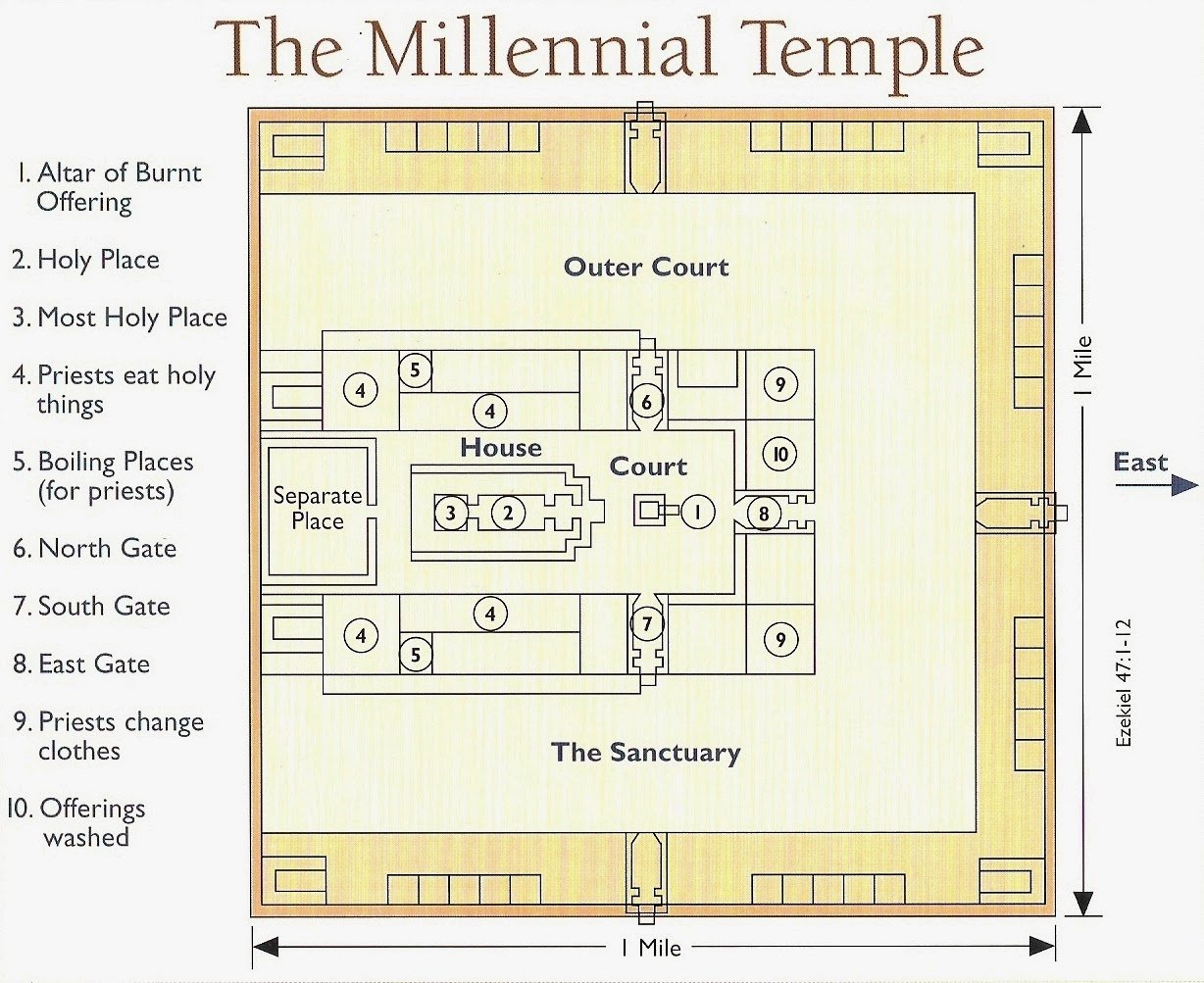
Fourth millennial temple layout as described in Ezekiel 40-42.
Ezekiel, writing by the inspiration of the Holy Spirit, was “moved by the Holy Spirit and spoke from God” (Ezek. 2:7; 2 Tim. 3:16-17; 2 Pet. 1:20-21). Ezekiel tells us in Ezek. 43:18-27 there will be sacrifices in the millennial temple. But how do we reconcile the need for animal sacrifices after Jesus’ once for all perfect sacrifice (e.g., Rom. 6:1; 1 Pet. 3:18; Heb. 9:26, 28; 10:10)? Let’s find out.
In summary, after Ezekiel gives the measurements and specifications of the millennial temple and its outer courtyard (Ezek. 40:1-43:17), he speaks of burnt offerings, sin offerings, and peace offerings (Ezek. 43:18-27). These offerings are described during a time when Jesus is ruling and reigning in righteousness over all the earth (Gen. 49:10; 1 Sam. 2:10; Ps. 2:6-8; Isa. 2:2-4; 9:6; 24:23; Zech. 8:20-23; 14:1-9, 16-17; Rev. 11:15).
But how this can be since Jesus is our “once for all sacrifice” (e.g., Rom. 6:1; 1 Pet. 3:18; Heb. 9:26, 28; 10:10)? It is true that we don’t “need” animal sacrifices to atone for our sins. We might strengthen that statement by saying no animal sacrifice has ever atoned man’s sin. The solution to the problem is to first consider the purpose of animal sacrifices under the law of Moses. Once we understand the purpose of blood sacrifices before Christ, we can understand the purpose of blood sacrifices after Christ in the millennial temple.
Many texts state that animal sacrifices, under the Law of Moses, “make atonement for sin” (e.g., Ex. 29:36-37; 32:10, 15-16, 30; Lev. 1:4; 4:20, 26, 31, 35; 5:10, 13, 16, 18; 6:7, 30; 7:7; 8:15, 34; 9:7; 10:17; 12:7-8; 14:18-21, 29, 31, 53; 16:24, 27, 32–34; . . .). Yet “how” could the blood of animals “make atonement” for man’s sin? The answer is they didn’t directly and couldn’t actually make atonement for man’s sin because you can’t atone for the sins of men with the blood of animals. You need a sinless human to willingly offer himself up as a sacrifice, in substitution for sinful, guilty men in order to make perfect atonement for man’s sin. This is what Jesus did.
The author of Hebrews says animal sacrifices can’t atone for man’s sin.
1. Animal sacrifices, the blood of bulls and goats, cannot make perfect the worshiper, i.e., make atonement for man’s sin (Heb. 9:9-10; 10:1-4).
2. If the animal sacrifices, under the Law of Moses, were able to make atonement for sins, they would have only needed to be offered once, but instead, they were offered continually showing that their purpose was not to atone for man’s sin but to symbolize or point to the One who could atone for man’s sin (Heb. 10:1).
3. The animal sacrifices were “symbols” and “shadows” of the once for all sacrifice of Jesus Christ to come (Heb. 8:5; 9:9; 10:1).
Since Jesus’ sacrifice alone can make atonement for man’s sin, why did God require animal sacrifices under the Law of Moses? The answer is that they pictured, symbolized, and were shadows of the perfect sacrifice to come, the sacrifice of the promised Messiah, Jesus of Nazareth. What this means is that every time the Law of Moses speaks of animal sacrifices as “making atonement for sin,” it is not saying the blood of bulls, goats, lambs, etc., can cover, atone for, make substitution for, or take away human sin directly. Old Testament saints were to place their faith in the promised seed of Abraham (Gen. 3:15; 22:18; 49:10; Gal. 3:16). Once they were saved by grace, through faith in God’s promise of a Messiah (the gospel, see Gal. 3:8), they were to obey the Law of Moses out of love for the Lord (e.g., Ex. 20:6; Deut. 5:10; 7:9; 11:1, 22; 30:16; Josh. 22:5; Neh. 1:5; Dan. 9:4). It was through faith in the promised Messiah that they would receive atonement, not because of the blood of animals, but because of what the sacrificed animals represented, pictured, symbolized, were a shadow of, looked forward to, i.e., the shed blood of the Messiah, the Lord Jesus Christ (Isa. 53).
Old Testament saints were saved, not by works, but in the exact same way as saints in the church age are saved, by grace alone, through faith alone, in Jesus Christ alone. They placed their faith in the promised Messiah (Gen. 3:15; 22:8, 18; 49:10; etc.) and were born again, regenerated by faith (e.g., Jn. 3:1-10; Rom. 4:3; Gal. 3:6; James 2:23). Jesus marveled that Nicodemus, “the teacher of the Jews,” didn’t understand Old Testament saints had to be born again by the Holy Spirit (Jn. 3:10). So, we see that the purpose of Old Testament animal sacrifices could never directly make atonement for sin. They merely symbolized, pictured, were a shadow of the future anticipated, once for all sacrifice of Jesus Christ, the Messiah (Ps. 22:1-31; Isa. 52:13-53:12; Dan. 9:26; Mk. 9:12; Lk. 24:26; Heb. 8:5; 9:9; 10:1). Now let’s address the purpose of the sacrifices in the future millennial temple (fourth temple).
The sacrifices in the millennial temple (Ezek. 43:18-27) will have a similar purpose to the sacrifices under the Law of Moses. Like animal sacrifices under the Law of Moses, they are said to “make atonement” (Ezek. 43:20, 26; 45:15-20). But as we have already seen above, animal sacrifices cannot make atonement for the sins of men directly (Heb. 8:5; 9:9; 10:1). This tells us that they are memorial sacrifices that look back upon and are offered in retrospect of Jesus’ sacrifice. Just as animal sacrifices under the Law of Moses didn’t directly atone for sin, but looked forward to Jesus’ once for all sacrifice, so millennial temple sacrifices won’t directly atone for man’s sin, but look back upon the once for all sacrifice of Jesus Christ.
Some have argued, “Why would animal sacrifices be needed in the future millennial temple?” We could ask the same question about blood sacrifices under the Law of Moses. Neither Old Testament sacrifices nor millennial sacrifices are “needed” to make atonement for sins. They are “needed” because the Lord commands them to be offered. Jesus “needed” to die on the cross to make atonement for our sins. Animal sacrifices under the Law of Moses, or in the millennial temple, are “needed” because the Lord commands them to be offered as a symbol and shadow or memorial of Christ’s perfect, once for all sacrifice.
Consider that Jews and Gentiles in the church regularly celebrate or commemorate Jesus’ death in communion or the Lord’s supper. We remember, look back in retrospect to Jesus’ body broken for us and His blood shed for us. We “proclaim the Lord’s death until He comes” (1 Cor. 11:26). We celebrate, memorialize His atoning work when celebrating the Lord’s supper (Mt. 26:26-29; Mk. 14:22-25; Lk. 22:17-20; 1 Cor. 11:23-26). The church will continue to do this “until He comes” (Zech. 14:1-5; Mt. 24:29-31; 2 Thess. 1:7-8; Rev. 19:11-16), which will occur at the end of Daniel’s seventieth week (Dan. 2:44-45; 9:27).
To sum up, we can anticipate a fourth millennial temple to be built in Jerusalem. In the millennial temple animal sacrifices will be offered as a memorial of the Lord’s perfect atoning death on the cross.


"Churches are going apostate inside their comfortable church buildings!"